
There’s always that one, defining album that a band releases in their career, that one album that they’re remembered for when they’re long gone whether or not they’ve hit mainstream fame. An album of such a caliber is typically referred to as a Magnum Opus, or a large and important work of music, the “Devil And God Are Raging Inside Me” and “American Idiot”’s of the Alternative/Punk music world.
In 2010, Philadelphia Pop-Punks, The Wonder Years released their No Sleep Records debut album, “The Upsides”, an album that would go down in infamy, an album that would define a genre and transcend all that had be constructed prior to it’s release, a magnum opus by all accounts. 2011 rolled around and so did the release of The Wonder Years’ follow up, “Suburbia: I’ve Given You All And Now I’m Nothing”, an album that not only surpassed it’s predecessor in terms of songwriting and musicianship, but with no delay, surpassed it’s predecessor in fan popularity. With “Suburbia” The Wonder Years exceeded both their own expectations and the critics and created a work of art that yet again took a title of Magnum Opus. “Suburbia” was so popular, and so influential to the youth of the 2010s that anything to follow it would automatically come with skepticism, an expectation that nothing could do what “Suburbia” did. Enter 2013’s, “The Greatest Generation”, an album for the ages, an album that would define a generation and procure a message that would set a tone for the future for the youth that followed The Wonder Years’ rise. “The Greatest Generation” spoke a truth of the day, that though we had been raised to believe we can’t be anything, we are stuck with the consequences of those who came before us, we have the potential to be “The Greatest Generation”. We have the potential to right all of the wrongs and be something more, to make a mark for the future and set other generations up for success, rather than failure like our generation has been. Yet again, armed with a new message, The Wonder Years managed to created what could be considered their Magnum Opus, their ultimate musical endeavor, the album that can’t be topped.
Here we are, it’s 2015 and it’s been over two years since the release of “The Greatest Generation”, and lead singer/lyricist, Dan “Soupy” Campbell knew that if we tried to be better people, to put aside what we’re guilty of and ashamed of, we could become more than what we’re expected to be. In those two, long years, the rise of the “Black Lives Matter” movement occurred, the unfortunate death of thousands of innocent people occurred, riots in Baltimore, which police took riot gear against though they were passive, occurred. Our world is in turmoil, and though we, as a generation, are bound together by these beautiful movements for justice, peace, dignity, tolerance and acceptance, that didn’t come without pain. Campbell is notably open about his political views, a current heavy supporter of Democratic Candidate Bernie Sanders, Campbell’s feelings of the world around him typically reflect in his music, his stances come from the heart, the songs that millions of fans identify come from his views of the world we’re in, the reality of his reality, that he is just another human being and the world isn’t perfect.
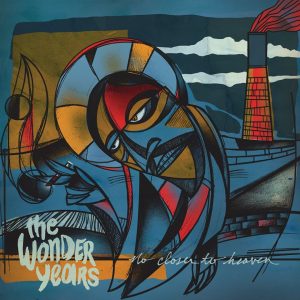
The Wonder Years’ new record, “No Closer To Heaven” is no different in terms of that truthful and blunt songwriting that Campbell has always been known for. However, in this effort, as opposed to “The Greatest Generation” where Campbell’s lyricism reflects his attempts at accepting all of the bad in his life and living with it, but not understanding it, just coexisting with it and letting go of what’s hurt him most, “No Closer To Heaven” is about not just accepting the fact he’s guilty, but truly understanding why he’s guilty. Many songs reflect the monopolized industry of painkillers and how they took the life of his dear friend, Mike Pelone, who was the topic of several Wonder Years songs in the past. In addition to that, many songs reflect to tumultuous world we live. Those many of the times it isn’t directly referred this tumultuous behavior of the world is often heard in songs that have a melancholic tone to them.
Take, “Cardinals” and “Cigarettes & Saints” for example. These songs both implement movements of a sort. The song builds on the prior movements of music and come to an overall climax and ending point which sums up the song. The Wonder Years are no strangers to movements in their music, on “The Greatest Generation”’s last track, “I Just Wanna Sell Out My Funeral”, there is several movements including a reprise of many of the bridges of prior songs. The use of movements in the piece give them an identity, not many bands do this. For most Pop Punk bands the music is very straight forward, but the emotions conveyed through movements give a song undertones to what it’s blatant meaning may be.
Overall, “No Closer To Heaven” comes to be a very solid work of art. The songs hit hard, the lyrics are deep and perfectly suited for the music. The performance aspect is top notch, with huge drum parts, crazy guitar leads and incredible gang vocals, “No Closer To Heaven” really expands the experimented sound found on “The Greatest Generation”. What I find most interesting about this album is the major emo influence on it.
If you ignore “You In January”, The Wonder Years first real attempt at a love song, none of the songs convey a positive message. In opposition to prior albums, this album isn’t really about fighting for something, or directly going against something, it’s more so a third person observation of the world around us. “No Closer To Heaven” is an observation on what’s wrong with our melancholic world and as priorly stated, it’s conveyed in the melancholic tones and music. Something I’ve noticed is the abundance of gang vocals on the album. I like to think that this isn’t unintentional, or done just for a cool effect, but rather as a way to convey yet another message. I’d like to think that these gang vocals are meant to signify and brotherhood, a banding together of people for the common goal of defying what the world wants and being “The Greatest Generation” that Campbell knew we could be, but that may just be me thinking to deep.
Nevertheless, “No Closer To Heaven” is an album that most certainly conveys a message, but the fact that it doesn’t show this message in the conventional way The Wonder Years’ have in the past, the fact that it isn’t that same story telling layout of the trilogy, shows that The Wonder Years are ready to move on and that excites me. The emo undertones on this album excite me for the future of this band. And while most would oppose change, and be afraid of it, let us not forget the drastic change from “Get Stoked On It!” to “The Upsides”. Change is good, a band can’t survive if they don’t challenge themselves and evolve and transcend their prior work, there’s no point in being a band if you follow the same formula every time, especially when you’re on an indie label and have the freedom to be anything you want to be.
Ultimately, “No Closer To Heaven” stands to be a triumph. It stands to be yet another Magnum Opus, but this time it’s different. For this record, there’s a sense of finality. It may not necessarily be their final album, though that has yet to be seen, but even if there’s 10 more records to come in their careers, the finality of this record gives it a true title of Magnum Opus. These songs outshine their prior work, through tracks like “I Don’t Like Who I Was Then”, taking a poppier approach that would appeal to older fans who grew up with their catchier hooks and also “Stained Glass Ceilings” which is the rawest and most emotional Wonder Years track to date. The range of songs is wide and the musicianship portrayed on each track makes it appear as a full, thought out idea and not something thrown together to create a product. This is truly the most cohesive piece of work from this band to date in terms of songwriting. I tend to be a stickler for song order and while that’s the only part of this album I don’t particularly enjoy, the cohesion from each song makes it all come together in some way or another.
“No Closer To Heaven”, is an album that will transcend The Wonder Years’ career and be an album that truly defines them, this album will be the one that separated them from their prior work. The more prominent hints of emo influence, the use of different time signatures, the cleaner and high end lead tones which at times “twinkle” over the top, and most importantly, the lyrics, which touch on subjects at both a third and first person perspective and attack topics such as religious hate and corporate companies wrap this album up to be more than just another pop punk endeavor about life in Philadelphia or dealing with depression.
Favorite Track: I Don’t Like Who I Was
Recommended Track: The Bluest Things on Earth
