
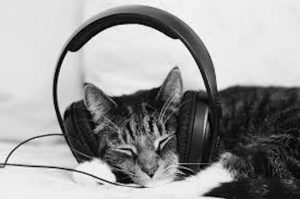
There is actually a publication called Journal of Feline Medicine and Surgery, which of course concerns cats’ health, and they have published a new study about cats and music. ‘Influence of music and its genres on respiratory rate and pupil diameter variations in cats under general anaesthesia’ by veterinary clinicians at the University of Lisbon, Mira F, Costa A, Mendes E, Azevedo P and Carreira LM. has revealed that cats benefit from hearing music during surgery! However it’s not any music, classical music is the thing.
Author Miguel Carreira, explains: ‘In the surgical theatres at the faculty where I teach and at the private veterinary medical centre where I spend my time operating, environmental music is always present, and is an important element in promoting a sense of wellbeing in the team, the animals, and their owners. Different music genres affect individuals in different ways. During consultations I have noticed, for example, that most cats like classical music, particularly George Handel compositions, and become more calm, confident and tolerant throughout the clinical evaluation. After reading about the influence of music on physiological parameters in humans, I decided to design a study protocol to investigate whether music could have any physiological effects on my surgical patients.’
And he and his team did studied 12 female cats, which had surgery for neutering, by recording their respiratory rate and pupil diameter during anesthesia. The cats were wearing headphones, and exposed to 2 minutes of silence as a control, then got to listen to 2 minutes of Barber’s ‘Adagio for Strings (Opus 11)’, Natalie Imbruglia’s ‘Thorn’ and AC/DC’s ‘Thunderstruck’. According to the physiological parameters that the vets recorded, the cats were in a more relaxed state when they were under the influence of classical music, while AC/DC produced the highest values, revealing a more stressful situation!
The authors want to examine other physiological parameters in cats and dogs by using sophisticated methods such as MRI and electroencephalograms in order to better understand the effects of music on our pets. But all vets should know about this and play classical music in their cabinets instead of awful radio stations or TV channels rebroadcasting the Oprah show or other stupid mid-afternoon soaps. On the other hand, this could explain why cats love pianos and turntables! Seriously, I can tell that my cat is sensible to music, he always sleep close to my computer speakers, although I don’t play a lot of classical music, but he seems to enjoy everything, even loud punk! Poor cat, time to switch to Mozart.