
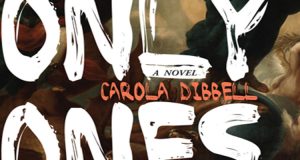
At the age of 70, social critic Carola Dibbell’s debut novel “The Only Ones”, the story of a pandemic in the second half of the 21st century, is way too accomplished to be a debut anything, but at least in one sense, it remains true to type: it is a self-portrait. Much like Vladimir Nabokov’s “Look At The Harlequins”, she has inverted her own story to write a superbly imagined piece of speculative fiction.
Dibbell has written in detail about her inability to have a baby in the past and she would finally adopt a baby girl, Nina Dibbell Christgau, to whom “The Only Ones” is dedicated. In “The Only Ones”, the protagonist Inez, writing a letter to an unknown (till the end) person is a “hardy” –immune to the diseases killing off millions upon millions of people, and therefore capable of having children who actually live. The story Of I(nez) and her daughter Ani (a contraction of Nina, reversed) is a portrait of Familial love.
When “The Only Ones” opens, Inez is travelling through Queens to a farm where a bunch of shady genetic engineers want to use her to hatch (literally, eggs in incubators) clones for a rich woman whose four daughters have died from the diseases moving across the world in waves. The woman changes her mind and I (her nickname) is left with the only baby who made it still alive.
In a very scary world, a Queens, New York re-imagined as a post-apocalyptic nightmare, barely functioning , with attempts to quarantine the inhabitants haphazard and dead bodies accumulating, and only glimpses here and there of the Borough we know, I raises her daughter Ani with the constant, heartbreaking mantra as the weeks and years tick by: “Still alive”.
Dibbell’s achievements here are many, in a wholly believable alternate world, she places her hero, an undereducated girl with an instinctive smartness and will to live, and she speaks with this girls voice unerringly and follows her and Ani through the frightful future, where the struggle to survive, aided by being a hardy, and seriously hindered by Ani being “a clone” and therefore illegal, get tougher and tough. I holding down three jobs to keep Ani in school, and making trips to the farm where they harvest and freeze more eggs, battles bureaucracy’s, schools, and her own daughter, as she attempts to keep her clone alive .
The wonder of “The Only Ones” is how completely Dibbell immerses you in this horrify future world, how through Inez’s eyes and perceptions, more than simply an unreliable but an unaware narrator, who can’t, and shouldn’t, consider her actions wrong, you live so completely in this other world. Inez is, as much as any character can be, an innocent. As a mother, her motherliness bubbles under the surface as she goes to any lengths to protect Ani.
The only person more innocent that I is A. Ani is just a young girl growing up, only aware of the world she lives in, and filled with the conflicting feelings of any girl: the normal rebelliousness that comes with the passing of time, the normal cruelty of girls provide their mothers: “What do you know?” And all the insecurities that come with being young.
With its keen eye for the details of things that have never existed, and beautifully maintained vernacular tone, Dibbell is both very tender and very hardened; it deals in the world with a tough mindedness that makes Inez a great heroine.
I’d said “The Only Ones” is a form of self-portrait and I believe it is that but not quite that, it takes one of Dibbell’s core experiences and it manipulates the experience from one story to a different story, in doing so it shreds the facts and only keeps the truths.
Grade: A